

01
Choose the sightseeing time before the hotel nights
One full day works for a first visit built around Kalta Minor, Kunya Ark, Juma Mosque and Tosh Hovli. Choose two if you want to add Pahlavon Mahmud, Islam Khoja, a particular museum or workshop, and time to stop between them. These are our recommended allocations, not a claim that every museum fits into either version.
Count from the moment you can start sightseeing with your luggage stored. Arrival evening → one sightseeing day → departure morning means two nights. Arrival evening → two sightseeing days → departure morning means three nights. Two nights with an afternoon arrival and a morning departure leave one full day.
Our 14-day Uzbekistan itinerary has three nights in Khiva: arrival on day 9, city sightseeing on day 10, a second city day or a castles excursion on day 11, and departure on day 12. If following the 10-day route, calculate the usable time around its shorter stay before adding stops.
02
Ichan-Kala is the main walking area
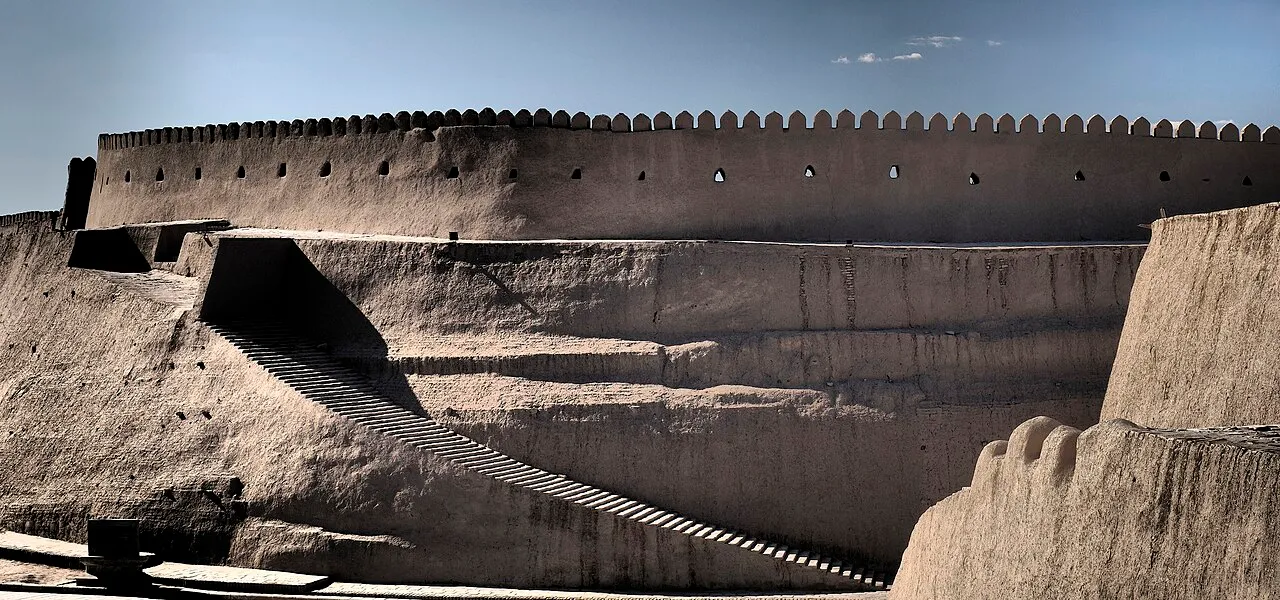
Ichan-Kala is Khiva's walled inner town, inscribed on the World Heritage List in 1990. UNESCO describes the inner town as a rectangle of roughly 650 by 400 metres. Those dimensions explain why a walking itinerary is practical; they are not the length of your sightseeing route. UNESCO's site description also values the streets and residential architecture alongside the individual monuments.
Use Ota Darvoza, the western gate, as the starting reference. Begin with Kalta Minor and Kunya Ark, then continue to Juma Mosque and Tosh Hovli. Save each entrance on your map: walking to a building's outer wall can leave you on the wrong side of its visitor entrance.
The national tourism city guide notes that people still live and work inside Ichan-Kala. Keep residential doorways clear, ask before photographing someone and enter private courtyards only by invitation. Leave some time for the streets themselves instead of treating every doorway as another scheduled attraction.
03
One full day: four main visits and room to rest
Start after breakfast and after checking that day's admission arrangements. The allowances below are our planning estimates for visits, not measured walking times, appointment slots or guaranteed opening hours. Add the walks, ticket queues and meals. If you have only a partial day, retain Kalta Minor and choose two interiors according to your interests.
| Part of day | Proposed visit | Suggested allowance and adjustment |
|---|---|---|
| Morning | Ota Darvoza and Kalta Minor, then Kunya Ark | 20–30 minutes around the gate and minaret; 60–90 minutes for the citadel |
| Late morning | Juma Mosque | 30–45 minutes; leave time to look closely at the columns |
| Midday | Lunch and a seated break | Allow at least an hour; take a longer break in your room if the weather calls for it |
| Afternoon | Tosh Hovli Palace | 60–90 minutes; confirm which entrances serve the parts you want to visit |
| Late afternoon | One optional visit or more time in the streets | Choose Pahlavon Mahmud or Islam Khoja if access and your pace allow; otherwise leave them for day 2 |
| Evening | Dinner and an optional short walk | Arrange your return route; a street walk does not establish that museum interiors remain open |
04
What to look for on the first day
Kalta Minor: the broad, unfinished minaret is covered in glazed tile and majolica. The Uzbek tourism account records construction stopping in 1855 after Muhammad Amin Khan's death. Look at the bands of decoration from ground level; this itinerary does not depend on climbing it. Stories about a fleeing architect belong to the site's legends, not a confirmed explanation of every detail.
Kunya Ark: this was the khans' citadel within Ichan-Kala. Its historic functions included reception rooms, a mint, mosques and domestic quarters. The national tourism description places its construction in the late seventeenth century and records rebuilding in the early nineteenth. Ask which areas are open, then look for signs of those uses in the accessible rooms. A historical list of buildings is not today's visitor-access list.
Juma Mosque: focus on the low, columned interior rather than expecting another monumental courtyard. UNESCO describes a covered space lit through two octagonal roof openings. Compare the columns and the changing light instead of trying to photograph the whole hall from one position. Follow the staff's instructions on shoes, photography and any temporarily restricted areas.
Tosh Hovli, also written Tash Hauli: built for Allakuli Khan in 1830–1838, this palace separates domestic and ceremonial spaces. Look for blue-and-white tilework, carved wooden columns and the circular platform used for a guest yurt in a reception courtyard. The Uzbek palace description gives those architectural details. Confirm access to the separate parts before buying or scanning a ticket.
05
A second day: choose more Khiva or a day outside it
A second city day is most useful when it gives yesterday's optional stops proper time. Start with Pahlavon Mahmud and Islam Khoja, choose one additional subject you care about, and leave an afternoon block for Nurullaboy Palace or a longer break. You do not need to fill every block.
For a museum or craft visit, choose the subject first. The national tourism programme for Khorezm lists the khans' history exhibition at Muhammad Rahim Khan II Madrasah, music history at Qozikalon, wood carving at Khojash Mahram and silk-carpet weaving at Yakubboy Khoja. Use these names to ask what is operating on your date; the published programme does not guarantee a class without a booking or access to every exhibition.
| Choice | What it adds | What to arrange |
|---|---|---|
| Second day in Khiva | Pahlavon Mahmud and Islam Khoja; one museum or workshop; optional Nurullaboy | Allow 30–45 minutes for each of the first two stops, 45–60 minutes for a chosen museum, or the workshop's confirmed duration; 60–90 minutes for the palace plus travel time |
| Desert-castles day | An excursion outside Khiva, for example to Toprak Kala and Ayaz Kala | Agree the precise stops, vehicle, walking requirements, lunch and return time; use the one-day city plan on the other day |
| Two city days plus castles | Time for both city plans and a separate excursion | Reserve three full sightseeing days; arriving the evening before and departing the following morning means four hotel nights |
06
Pahlavon Mahmud, Islam Khoja and Nurullaboy
Pahlavon Mahmud: the shrine developed around his burial place and later became a dynastic burial complex for Khiva's rulers. The Uzbek mausoleum history dates construction of the later brick mausoleum to 1810–1835. Give the visit room in the day rather than making it a quick photo stop. Follow current signs and staff guidance on clothing and access; the age of a doorway does not mean it is open to visitors.
Islam Khoja: this early twentieth-century ensemble pairs a small madrasah with a tall minaret. Construction ran from 1908 to 1910 according to the Uzbek ensemble description. That contrast in scale is worth seeing even without an ascent. Check separately whether climbing is offered, what it costs and whether the stairs suit you; the base plan requires no climb.
Nurullaboy: give this palace its own visit block. Its palace history describes parquet floors, painted ceilings and porcelain stoves alongside Khorezm decoration. Choose it if you want a different kind of palace interior after Tosh Hovli. Check the entrance and the rooms available, then decide whether it is more convenient to walk or take a taxi from your accommodation.
07
Ichan-Kala tickets: establish exactly what you are buying
Our online checks on 13 September 2026 did not establish a current, complete museum admission tariff. Before paying at the museum ticket office, show your selected stops and ask for the price and inclusions for your visitor category. Keep the ticket or receipt with you.
Ask separately about entry to the inner town, the museums on your list, Pahlavon Mahmud, any minaret or wall access, and Nurullaboy. Request the validity period, re-entry rules and last admission for the sites you intend to visit. Do not build a two-day budget around an unverified 'all-inclusive' or '48-hour' description.
A ticket sold for an activity in Ichan-Kala may cover only that activity. For example, the published iTicket description of the Russian-language Voice of Khiva audio performance explicitly says old-town admission is paid separately. That listing is not evidence of today's museum tariff or an available performance on your dates.
08
Stay inside the walls or near a gate?
Start with the actual address rather than the words 'old town'. For a short stay, our preference is a room inside Ichan-Kala or just outside a gate that makes your chosen sights and midday rest convenient. Check the walking route to that gate and the final stretch to reception.
Inside the walls suits travellers who want to step back into the streets after a break. Ask where the driver can drop you, how far you must carry bags and whether your room is reached by stairs. For a property outside the walls, compare the nearest usable gate, the walk after dinner and vehicle pickup against the room price.
An early train or flight makes the departure arrangement particularly important. Confirm reception availability, luggage help, breakfast timing and the agreed meeting point directly with the property. A district label cannot verify a quiet room, cooling, heating, step-free access or a vehicle at the door.
09
Use lunch for Khorezm food and a real break
Two regional dishes to look for are shivit oshi—dill-green noodles served with a meat-and-vegetable sauce and yoghurt—and tuxum barak, parcels of dough filled with egg mixture. Both appear in the Uzbek national tourism guide to Khiva. Ask what is available before sitting down if either is the reason for choosing a place.
For a vegetarian meal, confirm the sauce, stock and garnish as well as the noodles. For allergies, explain the specific ingredient to the person taking the order. Dish names alone cannot establish a kitchen's preparation or cross-contact arrangements.
Choose lunch by the seating and the time you need to recover, then return to the visits. Check the menu, portion size and service charge before ordering; use our money guide for the broader cash-and-card plan.
10
Heat, walking and access: shorten the plan where it helps
The national tourism guide describes Khiva's dry climate, hot summers and winter temperatures that can fall below freezing. For warmer weather, put your chosen outdoor walk near the start of the day, protect the lunch break and keep the optional afternoon stop optional. Check the forecast for your dates alongside our season guide.
For a slower pace, keep Kalta Minor and two interiors, then move the remaining visits to a second day. Do not replace a rest break with an extra monument simply because the next pin looks close. Ask the accommodation about cooling or heating when booking.
If you use a wheelchair, a walking aid or a pushchair, request the actual route to the rooms and sights you want: surfaces, thresholds, steps, toilets and places to sit. A compact historic centre is not an accessibility certification. Leave minaret and wall climbs out of the essential plan; anyone who skips them should still have a worthwhile visit.
11
Arrival: distinguish Khiva station from Urgench airport
Khiva has its own railway station. The railway operator's Uzbek report records its opening in 2018 and the connection towards Ichan-Kala. For a visit today, follow the station printed on your booked ticket and arrange the final journey to your accommodation; the old report is not a current train timetable or a measured hotel walk.
If arriving at Urgench airport, arrange a road connection to Khiva and give the driver the flight details and your hotel's exact address. The national tourism programme treats Urgench arrival and the onward journey to Khiva as separate stages. Use the actual arrival time, luggage collection and transfer plan when deciding what fits that day.
Coming from Bukhara? Start with our Bukhara-to-Khiva transport guide and verify the service offered for your date. For an onward train, use the booking guide and subtract the hotel-to-station journey and boarding allowance from sightseeing time. A late departure only adds usable hours if your luggage and transfer are already arranged.
12
Put Khiva into the rest of your trip
Choose one full city day, two full city days, or one city day plus castles before requesting accommodation and transport. This keeps the quote tied to the time you actually have.
OxusRoad can help arrange a guide, accommodation, transfers and a wider Uzbekistan route. Send your dates, group size, arrival and departure details, preferred guiding language, and any mobility or food requirements. Mention which visits matter most so the proposal can explain the included admissions and realistic alternatives.
Common questions
Is one day enough for Khiva?
One full day works for the selected Ichan-Kala plan: Kalta Minor, Kunya Ark, Juma Mosque and Tosh Hovli, with a meal and rest. Add a second city day for more interiors, a workshop or Nurullaboy. An arrival afternoon is not a full sightseeing day.
How many nights should I book for two days in Khiva?
Three nights give two full days if you arrive the evening before and leave the morning after. Two nights can work with suitably timed arrival or departure, but first subtract luggage arrangements, transfers and boarding time.
Does one Ichan-Kala ticket include everything?
Do not assume that it does. Ask the museum ticket office to confirm your visitor category, the named sites included, validity, re-entry and any separate charges. Our 13 September 2026 online checks did not verify a complete current tariff.
Can I walk between the main Khiva sights?
Use walking as the basis of the selected Ichan-Kala route, then check the actual entrances and your comfort with the surfaces and steps. Plan the station, airport and Nurullaboy connections separately. The essential itinerary includes no climb.
Can I see Khiva and the desert castles in two days?
Yes, as one full city day plus one separately arranged excursion day. That is different from two full days sightseeing in Khiva. For two city days and a castles day, reserve three full sightseeing days and the nights needed around your arrival and departure.
Sources and checks
Sources checked online on 13 September 2026. Monument details draw mainly on Uzbek-language national tourism sources; UNESCO supplies the World Heritage context. Visit durations and stop choices are editorial planning allowances. Current ticket prices, room access and activity availability require confirmation; no field inspection is claimed.
- UNESCO: Itchan Kala
English; inscription, inner-town dimensions and Juma Mosque's roof lighting.
- Uzbekistan Travel: Ota Darvoza
Uzbek; western gate and orientation.
- Uzbekistan Travel: Khiva
Uzbek; residential life, regional dishes and climate.
- Uzbekistan Travel: Kalta Minor
Uzbek; unfinished minaret, tilework and 1855 construction stop.
- Uzbekistan Travel: Kunya Ark
Uzbek; historic citadel functions and construction periods.
- Uzbekistan Travel: Tosh Hovli
Uzbek; 1830–1838 construction, palace spaces and decoration.
- Uzbekistan Travel: Khorezm visit programme
Uzbek; museum and workshop subjects, Urgench–Khiva connection. Proposed programme is not a current opening schedule.
- Uzbekistan Travel: Toprak Kala
Uzbek; identifies the archaeological site in Ellikqala, Karakalpakstan. No current excursion or access confirmed.
- Uzbekistan Travel: Ayaz Kala
Uzbek; location near Bustan in Ellikqala. Old transport and camp descriptions are not current operating confirmations.
- Uzbekistan Travel: Pahlavon Mahmud
Uzbek; later mausoleum dated 1810–1835 and dynastic burial function.
- Uzbekistan Travel: Islam Khoja
Uzbek; 1908–1910 ensemble and contrasting building scale; no ascent access confirmed.
- Uzbekistan Travel: Nurullaboy Palace
Uzbek; parquet, ceiling decoration and porcelain stoves.
- iTicket: Voice of Khiva audio-performance description
Russian event text under an English interface; museum admission explicitly separate. Not a current museum price list or confirmed session.
- Uzbekistan Railways: Khiva station context
Uzbek, 10 May 2021; station opened in 2018. Historical context, not today's timetable.