

01
Decide when your city day really starts
The clock starts after arrival formalities, the journey to your accommodation and luggage storage. A flight landing at noon does not mean you can start sightseeing at noon. Use the Tashkent airport arrival guide to plan that first part separately.
For an evening arrival followed by a full city day and a morning train, book two hotel nights. With one night, the amount you can see depends on both arrival and departure times. After an overnight flight, make rest and early room access an explicit choice before accepting a timed museum booking.
| Time available | Proposed programme | Leave for another day |
|---|---|---|
| One full day | Hazrati Imam → Chorsu and lunch → metro → central walk | A second large museum and an excursion outside the city |
| Several free hours on the afternoon of arrival | Chorsu and a short metro journey, or one central walking area | A complete old-city-and-centre circuit |
| Late arrival or little energy | Dinner and a short walk near the hotel | Paid visits with fixed entry times |
| Full day focused on Islamic history | Islamic Civilization Center plus selected Hazrati Imam buildings; Chorsu if time allows | The additional museum and a long central circuit |
02
A full-day plan with a deliberate lunch break
The visit allowances below are our planning estimates. They exclude the journey from your hotel, traffic, queues and the final return. Current opening hours, prayer arrangements and your pace determine what fits. The final museum is optional: keep the rest break if adding it would make the day uncomfortable.
| Block | What to do | Planning allowance |
|---|---|---|
| Morning | Hazrati Imam: choose the accessible courtyards and buildings you want to see | 60–90 minutes, plus the journey there |
| Late morning and lunch | Chorsu: food sections, shopping if wanted and a seated meal | 90 minutes or longer if the market is a main interest |
| After lunch | A short metro journey, with Alisher Navoiy as one architectural stop | 45–60 minutes including finding entrances and changing platforms |
| Afternoon | Choose a walk around Amir Temur Square, or one museum | 60–90 minutes for the selected activity, plus travel time |
| Evening | Dinner; an optional walk near your accommodation | Keep this flexible, especially before an early train |
03
Hazrati Imam: name the building you want to enter
The Uzbek description of Hazrati Imam, also called Khast Imam, identifies an ensemble around the burial place of Kaffol Shoshiy, with Baroqxon Madrasah and Tilla Shaykh Mosque among its buildings. The official destination inventory places it on Qorasaroy Street. Use a specific entrance pin for your driver; the complex name covers more than one doorway.
Start by establishing which buildings are open to visitors and which are in religious use at that time. Ask about clothing, shoes and photography at each entrance. A walk through an open square does not establish access to every interior, and an old guidebook’s admission price may describe a different exhibition.
04
The new museum needs its own time and ticket
The Islamic Civilization Center’s exhibitions cover pre-Islamic culture, the ninth-to-thirteenth-century scientific flowering and the Timurid period as well as the Quran Hall. Choose it for a substantial museum visit, and reduce the rest of the day accordingly.
On our 13 September 2026 check, the Uzbek iTicket listing showed a standard ticket for an adult foreign visitor with an English or Russian audio guide at 425,000 UZS. A guide costs extra. The standard group format has a two-hour limit; the listing recommends arriving 15–20 minutes early and allows entry during the first 30 minutes of the booked session. The listing bars shorts. Recheck the category, date and terms before paying.
One workable museum-focused version is the booked session, a selected Hazrati Imam visit and lunch at Chorsu if time permits. Keep the central walk optional. Do not assume that being in the same broad part of the city makes a two-hour museum visit an extra ten-minute stop. For a museum-heavy trip, a second Tashkent day is easier to use than a final evening squeezed between transfers.
05
Chorsu: decide whether you are browsing, buying or eating
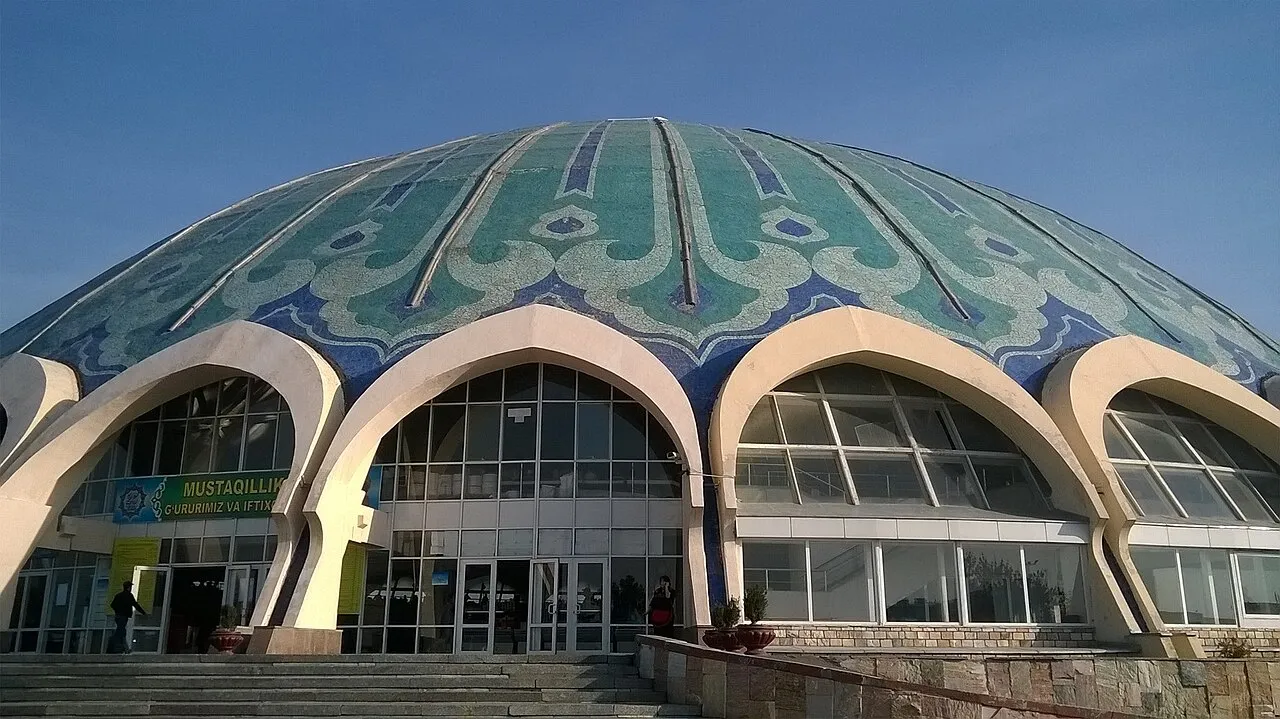
The national tourism description of Chorsu distinguishes the covered food pavilion, dairy, dried-fruit and spice areas, and nearby prepared-food stalls. Ko‘kaldosh Madrasah and the Khoja Ahror Vali Mosque are nearby. That gives you a compact market-area block; entry to a religious building still needs a separate check.
For browsing, choose two or three sections. For buying, agree the item, quantity and price before it is packed; ask whether the price is per kilogram or per piece. For lunch, check the menu, portion and service charge, then choose a place where you can actually sit for the break you need. This guide does not rank restaurants or certify individual vendors.
Prepare a backup payment method using the money guide. Explain dietary requirements to the person taking the order rather than relying only on a dish name. Ask before taking a close photograph of someone working. If the market is the part you most want to explore, spend longer here and reduce the afternoon programme.
06
Use the metro to connect two areas
The metro is part of the sightseeing as well as transport. The national tourism account describes its station architecture and decoration. For this route, use Chorsu as the market-area station and Alisher Navoiy as a possible stop; its interchange with Paxtakor allows you to continue toward Mustaqillik Maydoni or Amir Temur Xiyoboni. The official map hosted by its designer shows these central connections. Follow current station signs for the platform and exit.
Save the station names in Latin and Cyrillic if that helps you compare maps: Chorsu / Чорсу; Alisher Navoiy / Алишер Навои; Paxtakor / Пахтакор; Amir Temur Xiyoboni / Сквер Амира Темура. Plan a few stations with a purpose instead of riding the whole network during a one-day visit.
ATTO’s Uzbek public offer describes physical transport cards, contactless national and international bank cards, and paper or electronic QR tickets. It states that ordinary transport cards can be bought at metro ticket offices without an identity document. Check the current fare and available payment method at the station; published card compatibility is not a test of your own bank card.
If your card fails, ask staff for a usable ticket or card option before continuing. With heavy bags, a pushchair or limited mobility, check the specific entrance and transfer route; a metro symbol on the map does not confirm a step-free journey. Keep the sightseeing ride separate from a tightly timed trip to the railway station.
07
Choose a central walk or a museum to suit your interests
For an outdoor finish, use Amir Temur Square and its equestrian monument as the reference point. The Timurid History Museum is nearby. A look at its exterior can fit a walking block; a full museum visit requires its own admission check and time. The square and museum are different stops even when they share a photograph.
If crafts matter more, the Applied Arts Museum offers a different subject: its collection includes ceramics, embroidery, clothing, carpets and musical instruments. Treat it as an alternative afternoon destination, with a separate transfer, rather than appending it to every other stop. Choose the collection, then verify the opening day, available galleries and ticket for your visitor category.
For bad weather, swap the outdoor central block for the museum you actually want. For fatigue or heat, shorten the programme and use transport back to the hotel. Museum names on a city list do not guarantee that all galleries will be available on your date.
08
Choose the hotel around the next journey as well as sightseeing
For a short stay, compare a central address near the metro with an address convenient for Chorsu and Hazrati Imam. Use actual entrance pins, the route from the station and your expected arrival time. Ask about luggage storage, early room access, stairs, cooling or heating and breakfast if leaving early. Those answers matter more than a generic “central” label.
For Tashkent–Samarkand, use the railway station printed on your booked ticket. Do not infer the station from the metro stop named Toshkent or from a hotel’s distance to “the station”. Keep the hotel-to-station journey and the operator’s boarding requirements outside your sightseeing allowance.
If travelling to the Fergana Valley, confirm the actual destination station and onward road connection before deciding when the Tashkent programme must end. For a flight, use the correct terminal and your airline’s reporting time. An evening departure adds city time only after luggage, transport and reporting requirements have been subtracted.
09
Make a short city plan easy to arrange
Send OxusRoad your arrival and departure details, hotel address if booked, group size and the one subject that matters most: market life, architecture, Islamic history, crafts or a general first visit. Mention any limit on walking or stairs and whether you need a guide, transport or both.
We can fit a city day into the wider seven-day, ten-day or fourteen-day route. The useful first decision is whether this is a full day with your luggage stored, an afternoon after arrival or a short stop before departure.
Common questions
Is one day enough for Tashkent?
One full day is enough for a selected introduction: Hazrati Imam, Chorsu, a short metro journey and one central block. It is not enough for every major museum. Allow another day if a long museum visit, craft collection or a slower pace is important.
Can I see Tashkent during a layover?
Calculate usable city time only after confirming your entry eligibility, baggage arrangements, terminal changes and the airline’s return requirements. A layover's duration alone does not tell you whether a city excursion will fit. Once those details are known, choose a short version with a clear turnaround time.
Where should I go to see the Usman Quran?
The Tourism Committee’s 2026 information places it in the Islamic Civilization Center’s Quran Hall. Check the current museum ticket and session. Do not rely only on an older description of the Hazrati Imam library.
Should I hire a driver for the entire day?
A guide-and-driver arrangement can simplify hotel connections and help with limited walking or a museum-focused plan. A combination of metro, walking and separately arranged car journeys can suit the standard route. Compare the actual pickup, waiting time and drop-off, not just the word “transfer”.
What should I cut after a late arrival?
Keep one area: Chorsu and a short metro ride if the remaining time works, or a central walk near your hotel. Leave the full museum and a second cross-city block for a day with more usable hours.
Sources and checks
Checked online on 13 September 2026. Research draws primarily on Uzbek destination, Tourism Committee, ticketing and transport sources. The map has Uzbek/Russian labels and is hosted by its designers. Visit durations and route order are editorial planning estimates. Current admission arrangements, acceptance of individual payment methods and door-to-door travel times were not checked in person.
- National tourism portal: Hazrati Imam
Uzbek; architectural ensemble only. Older manuscript-location information is superseded by the 2026 Tourism Committee source.
- Official destination inventory: Tashkent
Uzbek; Qorasaroy location, not admission or access conditions.
- National tourism portal: Chorsu
Uzbek; market sections and nearby landmarks; no vendor verification.
- Tourism Committee: Islamic Civilization Center
Uzbek; 6 April 2026. March opening, Quran Hall and exhibition subjects.
- iTicket: museum admission and sessions
Uzbek ticket listing checked 13 September 2026; category, audio, timing and extra guiding. Recheck before purchase.
- National tourism portal: Tashkent metro
Uzbek page with a Russian paragraph; station architecture, not a live operating schedule.
- Official metro map: designers’ 2024 edition
Uzbek/Russian-labelled primary map. Used for central station connections; current signs govern on the day.
- ATTO public offer, revision 7
Uzbek PDF. Payment media and ordinary-card purchase; no individual foreign-card acceptance test.
- National tourism portal: Amir Temur Square
Uzbek; monument and nearby museum; not current museum opening hours.
- National tourism portal: Applied Arts Museum
Uzbek; collection subjects, not a guarantee that each object is on display.