
.jpg)
01
Two full days or three: count the journey days too
This route suits travellers who want to spend time with ceramics and textiles as well as see Kokand's monuments. The two-day version combines both craft towns on the second day; it works only if the hosts' appointment times and the road transfers fit. Three full days give each craft its own day and leave more room for questions, shopping or a booked practical session.
Here, a full day begins after breakfast with your luggage arrangements settled. Arrival evening → two full days → departure morning is three nights across four calendar days. Add a third full day and the stay becomes four nights across five calendar days. These counts include the night after arrival and the night before departure, not an overnight train.
If your entire trip from Tashkent must fit into two or three calendar days, first select the actual outward and return connections. A three-calendar-day, two-night trip has one full middle day and whatever usable time the two journey days leave. For a two-calendar-day, one-night trip, start by choosing Kokand and one craft town; add anything else only after the timings work. Do not treat an afternoon arrival as the full Kokand day below.
02
Follow Kokand → Rishton → Margilan, then choose a base
Use Kokand for the historical part, Rishton for pottery and Margilan for silk. The Uzbek national tourism description of Rishton places it between Kokand and Fergana. That geography makes a move across the region useful: stay in Kokand first, visit Rishton with your luggage in an agreed vehicle, then sleep in Margilan or Fergana city.
Fergana city, Fergana Region and the wider Fergana Valley are different things. This itinerary selects three towns and an optional city base; it does not cover every part of the valley. Adding Andijan, Namangan or another specialist visit means replacing a block or extending the trip.
You can reverse the order if your confirmed arrival, departure or host appointments favour it. Keep Rishton on the transfer between the Kokand side and the Margilan–Fergana side, and recalculate the hotel nights before booking.
03
Arrange the two long journeys before the craft appointments
Compare a train with a car transfer for your dates. For rail planning, start with Kokand, written Qo‘qon in Uzbek, and Margilan, written Marg‘ilon. Both appear in the railway operator's station directory. Search the specific stations and dates on the official booking site; a listed station does not establish that your preferred train stops there.
Our suggested direction is to arrive in Kokand and leave from the Margilan side if suitable services are available. If staying in Fergana city, include the separate transfer to the station actually printed on your ticket. Check the exact Tashkent station too. The train-booking guide explains what to verify before paying.
The Kamchik road crossing and the railway are separate transport options. A government report dated 11 August 2026 identifies the A-373 road and the Angren–Pop electrified railway through the pass area. The railway operator's infrastructure account records a 19.2-kilometre rail tunnel. That tunnel length is not the length of a road tunnel or your overall journey.
For a car, ask for a current door-to-door estimate including the chosen hotel, stops and road conditions. Reconfirm close to departure, especially when weather affects the pass. For a train, use the dated service's own departure and arrival times. Leave an overnight margin before an important onward flight if a disrupted return would be costly.
04
Two full days: Kokand, then two short craft visits
Arrive in Kokand the previous evening and stay there for nights 1 and 2. On the second sightseeing day, move onward with your luggage and spend night 3 in Margilan or Fergana city. Leave the region the following day. The visit lengths below are our planning allowances, not opening hours or confirmed appointment durations.
| Day | Suggested sequence | Time and overnight plan |
|---|---|---|
| Day 1 · Kokand | Khudoyar Khan Palace → lunch and a break → Jome Mosque → optional Dakhmai Shakhon | Allow 90 minutes at the palace and 45 minutes at the mosque, plus transfers; add 30–45 minutes for the tomb complex if access and energy allow. Night 2 in Kokand. |
| Day 2 · Rishton and Margilan | Morning transfer to a booked pottery visit → lunch → transfer to a booked silk visit → hotel | Aim for two introductory visits of about 60–90 minutes each. The driver and hosts must confirm that the full sequence fits. Night 3 in Margilan or Fergana city. |
| Departure day | Transfer to the confirmed departure station or other agreed endpoint | Keep this outside the two sightseeing days; buy the connection before treating any spare time as another visit. |
05
Three full days: give pottery and silk separate days
Keep the arrival evening and first day in Kokand as above. Spend nights 1 and 2 in Kokand, then move through Rishton to Margilan or Fergana city for nights 3 and 4. Departure is the next morning or later, outside the three full days.
The extra day is most valuable at the workshops. It allows you to ask how an object was made, compare techniques and leave without rushing the host. Use an agreed class duration when setting the timetable; a practical session can take the place of several short visits.
| Day | Main priority | How to use the remaining time |
|---|---|---|
| Day 1 · Kokand | Palace and Jome Mosque | Add Dakhmai Shakhon if appropriate, or spend longer at the first two sites. Second night in Kokand. |
| Day 2 · Rishton | One substantial pottery visit or a prearranged class | Take lunch, then move to Margilan or Fergana city. Avoid a second studio unless it adds a specific technique or artist. Third night in the new base. |
| Day 3 · Margilan | A confirmed silk visit with time for questions and fabric selection | Leave the afternoon for an additional agreed craft visit, a local market suggested by your host, or a rest in Fergana city. Fourth night in the same base. |
06
Kokand: look closely at three different kinds of building
Khudoyar Khan Palace: start with the tiled entrance and the surviving palace rooms. The Uzbek palace account describes carved doors, painted decoration and ganch plasterwork, and identifies Rishton craftspeople among its decorators. It also identifies the palace's museum use. Look for the relationship between the architectural surfaces and the ceramic work you will see the next day.
Jome Mosque, also called Juma Mosque: the national tourism description dates it to 1819–1822 and describes an iwan supported by 98 wooden columns. Compare the carving on the supports with the painted ceiling. Allow a separate visit rather than adding it as a passing photograph; ask staff which areas are accessible.
Dakhmai Shakhon: this burial complex of Kokand's rulers adds funerary architecture to the palace and mosque. Notice the glazed portal decoration and carved wood. It is an optional third stop, especially useful if that subject interests you; follow local instructions around graves and photography.
Arrange the transfers between the actual visitor entrances rather than assuming that every Kokand sight forms one short walk. Confirm admission and any guide charge for the sites you select. Historical accounts of a building's rooms or staircases do not establish what is open on your date.
07
Rishton: book the kind of pottery visit you want
The Uzbek account of Rishton pottery emphasises blue and turquoise decoration and the transmission of skills between masters and apprentices. Start with the object itself: compare a bowl's shape, the painted pattern and the finished glaze. Ask the maker which stages were done in that workshop.
The national tourism centre description identifies a Hunarmand centre and a museum of traditional Rishton pottery. These are useful starting names when arranging a visit. Confirm the exact host and map pin, since a town or centre name alone does not identify a particular working studio.
A shop visit means time to see and buy finished pieces. A demonstration means someone has agreed to show a process. A class means you participate, with an agreed duration, materials and instructor. Ask which of those you are booking, what will be happening that day and whether the explanation is available in your language.
If making something, ask when it can be fired, whether finishing and delivery cost extra, and what happens if you leave before it is ready. For a purchase, ask whether the piece is intended for food use or decoration, how to care for it and how it will be packed. Do not build a same-day souvenir promise around an unfinished pot.
08
Margilan: follow the cloth from thread to pattern
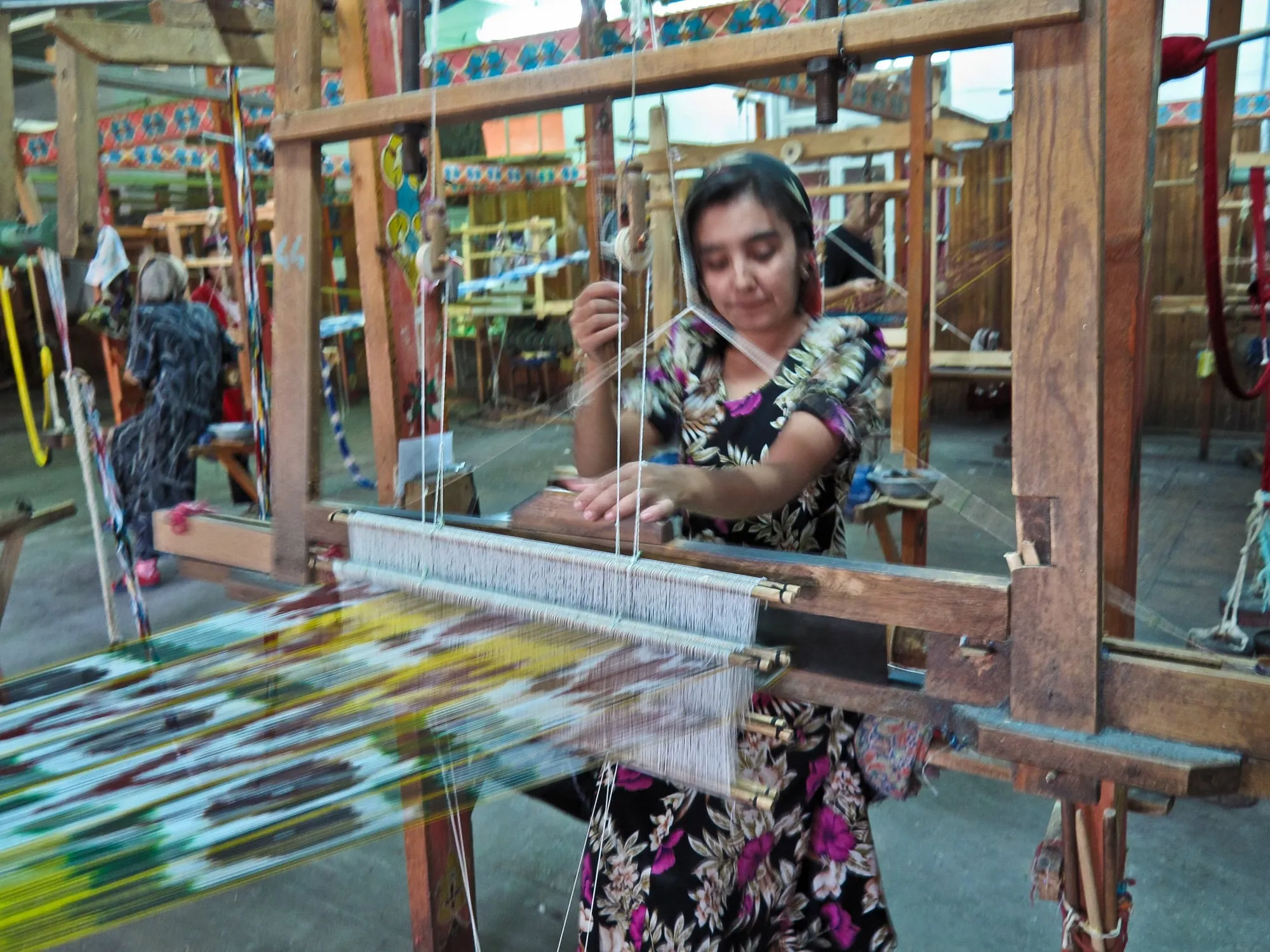
Yodgorlik is a practical starting point for a silk-focused visit. The Uzbek factory description dates its establishment to 1972 and describes the production of atlas and adras by hand. Ask which work areas and processes you can see on the booked date; the published description does not guarantee that every stage will be running during your visit.
The Uzbek explanation of khan-atlas describes repeated dyeing and wrapping of threads to build colours and patterns. A useful question at the workshop is how the design is planned in the threads before you see the finished fabric. Ask to compare a work in progress with a completed length if the host can show both.
Margilan also has a wider craft-safeguarding story. UNESCO selected the Margilan Crafts Development Centre's atlas and adras safeguarding programme for its Register of Good Safeguarding Practices in 2017. This recognition concerns that programme; it does not make Yodgorlik the same institution or establish a visitor class there.
If buying fabric, ask about fibre composition, weave, usable width, price per metre and care. Compare the cloth in daylight where possible, and agree the length before it is cut. For a demonstration or class, confirm the language and participation arrangements separately from shopping. Keep a market visit optional so it can fit around the confirmed workshop.
09
Where to stay: Kokand first, then Margilan or Fergana city
Two bases work well for the route shown because you move onward once instead of returning to Kokand after the craft visits. These are our planning trade-offs; individual hotel suitability depends on the address and room facilities.
For a relaxed final afternoon in Fergana city, the national city guide identifies Central Park and the Al-Fargani monument. Choose a short park walk if it fits your hotel location and the weather. Fergana city can be useful as a base without requiring another full sightseeing checklist.
| Base | Best fit for this itinerary | Check before booking |
|---|---|---|
| Kokand | The arrival evening and first full sightseeing day | Distance to your chosen entrances, station pickup, luggage storage and breakfast timing |
| Margilan | A silk appointment and a departure from Margilan station | The actual workshop and station transfers, room comfort and where you will eat |
| Fergana city | An alternative final base with a park/rest afternoon | The extra transfers to Margilan's workshop and any booked station; do not treat the city hotel as the rail endpoint |
| One base for the entire stay | Travellers who strongly prefer not to repack | Price the repeated driving and check both host slots before accepting the convenience trade-off |
10
Between towns: specify the vehicle, stops and luggage
Plan road transfers between Kokand, Rishton, Margilan and your final hotel. Walking is useful within individual visits; it is not the transport plan for the whole itinerary. Request timings for the exact sequence of addresses, including lunch and time to load luggage.
For the day with two craft visits, an agreed car and driver make it easier to keep appointment times and move bags between hotels. Specify the vehicle capacity, pickup and final drop-off, whether the driver waits during visits, and any allowance for an overrun. If arranging transport independently, confirm each onward pickup before starting a timed workshop.
A driver, a guide and a craft interpreter are different services. State which language you need and who will explain the craft processes. If you need step-free access or a particular seat arrangement, check the vehicle and each host's entrance, work area and toilet separately; a general accessibility label is not enough to plan the day.
11
Allow for meals, weather and workshop schedules
On a hot day, put the longer outdoor Kokand visits earlier and keep lunch and a seated break in the middle. Ask whether the chosen workshop's visitor area is comfortable in the expected weather; indoor production space is not automatically air-conditioned. In colder or wet conditions, confirm the room heating and the current road plan.
Tell the host about dietary needs before accepting a workshop lunch. Confirm whether a meal is offered, its contents and price; an invitation mentioned in someone else's trip report is not a booking for your group. Carry water for the transfers and schedule a toilet stop where it is useful.
Ask before photographing workers, homes or unfinished work, and let the host choose where you can stand during a demonstration. For children, agree the activity, supervision and minimum suitable age directly. In mosques and burial complexes, follow the entrance instructions and local expectations on clothing.
12
Get a quote that separates the main costs
This route has no single reliable price without dates, group size and confirmed craft arrangements. Compare the same set of services: arrival and departure travel, hotel nights, local car and driver, guide or interpretation, monument admission, workshop visit or class, materials, meals and any shipping.
Ask what is charged per person and what is charged per group, and whether waiting time is included. Keep purchases separate from admission and instruction. Confirm how and when each host accepts payment; the money guide helps with the wider cash-and-card plan.
Before paying a deposit, obtain the host names, exact addresses, accepted appointment times, inclusions and cancellation terms. Then check the journeys against those commitments. Current attraction fees, workshop tariffs and opening hours were not verified for this guide, so an old printed programme should not be used as the final booking schedule.
13
Place the valley before or after the western city route
The Fergana Valley needs its own eastern segment in your Uzbekistan itinerary. Start or finish it around Tashkent when the connections suit. If you also want Samarkand and Bukhara, rebuild the dates to include both journeys and the three or four valley hotel nights.
Our 7-day route already allocates its time to the main city journey. Adding this plan means extending the trip or removing other stays. With the 14-day route, decide whether ceramics and silk deserve a substitution or extra days; do not squeeze the valley into a transfer afternoon.
OxusRoad can help arrange a valley extension around your confirmed travel. Send your dates, group size, arrival and departure points, preferred language, and whether you want to watch, buy or take part in pottery and silk work. Add any mobility or dietary needs so the proposed hosts, vehicle and hotel locations can be checked together.
Common questions
Are two days enough for the Fergana Valley?
Two full days can cover selected Kokand sights and short, prearranged visits in Rishton and Margilan. Arrive the evening before and leave the morning after: that is three hotel nights. If the whole trip from Tashkent is only two calendar days, reduce the stops around the actual connections.
What does a third day add?
It separates Rishton and Margilan so a craft visit can last longer or include a confirmed practical session. With arrival the previous evening and departure the following morning, three full days require four hotel nights.
Should I stay in Kokand, Margilan or Fergana city?
For the route shown, stay in Kokand first, then move through Rishton to Margilan or Fergana city. Choose the final base around your silk appointment, room preferences and departure. A Fergana city hotel still needs a separate transfer if your train leaves from Margilan.
Can I just arrive at a workshop and take a class?
Arrange participation in advance. A shop, a demonstration and a class offer different things. Confirm the host, time, language, materials, total cost and what happens to an item that needs firing or finishing after you leave.
Does the train use the Kamchik road pass?
Road and rail are separate routes through the pass area. The railway uses the Angren–Pop line and a 19.2-kilometre rail tunnel. Check your dated train service and stations; for a car, confirm the road journey and current conditions with the transport provider.
Sources and checks
Prepared from public sources checked on 13–14 September 2026, primarily Uzbek-language national tourism and railway material. Route order, visit allowances and hotel-night allocations are OxusRoad planning recommendations. This was a desk review; current access, hosts, classes, fares and road conditions still need date-specific confirmation.
- Uzbekistan Travel — Khudoyar Khan Palace
Uzbek; architectural decoration, Rishton craftspeople and museum context. Undated; no current admission schedule.
- Uzbekistan Travel — Kokand Jome Mosque
Uzbek; 1819–1822 construction period and 98 wooden columns. Undated; access not confirmed.
- Uzbekistan Travel — Dakhmai Shakhon
Uzbek; rulers' burial complex and architectural details. Undated; visitor arrangements not confirmed.
- Uzbekistan Travel — Rishton pottery centre
Uzbek; regional location and named centre/museum. Undated; host appointments not confirmed.
- Uzbekistan Travel — Rishton pottery
Uzbek; decorative colours and master–apprentice craft tradition. Undated; no product certification inferred.
- Uzbekistan Travel — Yodgorlik
Uzbek; 1972 establishment and hand textile production. Undated; no live production or class calendar.
- Uzbekistan Travel — Khan-atlas colours
Uzbek; thread wrapping and repeated dyeing. Undated; production-time and output claims not reused.
- UNESCO — Margilan craft safeguarding programme
English; 2017 selection for the Register of Good Safeguarding Practices. Separate from factory admission.
- Uzbekistan Travel — Fergana city
Uzbek; Central Park and the Al-Fargani monument. Undated; no hotel comparison or road timings.
- Uzbekistan Railways — Station directory
Uzbek; names Kokand and Margilan stations. Undated; does not verify a particular train's stops.
- Uzbekistan Railways — Transport infrastructure
Uzbek; Angren–Pop line and 19.2-kilometre rail tunnel. Historical text; service frequencies not treated as current.
- Ministry of Mining Industry and Geology — Kamchik preparation
Uzbek; published 11 August 2026, updated 12 August. Identifies separate road and rail infrastructure; not live road status.
- Uzbekistan Railways — Official ticket search
Official booking application. No dated itinerary, seat result or fare was obtained in this source check.